
 By: Mark D. Milbrod, CLU, CLTC
Vice President, ASG
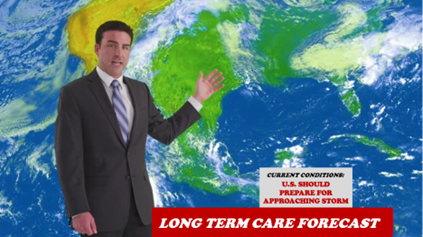
A weather forecast is always helpful. It allows us to prepare for events that can significantly impact our lives. That is why millions of us turn to The Weather Channel when a storm is approaching. We want to know the facts. We want to know what is headed our way so that we can stay safe, prepare accordingly, and hopefully minimize the damage.
Knowing a storm is coming doesn’t necessarily prevent the damage, but it gives us an opportunity to prepare. The same principle applies to retirement and long-term care planning.
The Baby Boomer generation is facing a significant challenge that has become known as the “Silver Tsunami.” By the year 2030, the last of the Baby Boomers will be turning age 65. According to U.S. Census projections, approximately 71 million Americans will be age 65 or older by then. Even more staggering, research from the Department of Health and Human Services indicates that approximately 70% of adults who reach age 65 will develop severe long-term services and support needs during their lifetime.
The numbers are more than statistics. They represent millions of individuals and families who will face difficult decisions about care, finances, and quality of life.
The math is staggering.
If we fail to prepare for this growing challenge, countless lives will be affected. Not only will seniors requiring care face potentially significant financial consequences, but their families will feel the impact as well.
Consider this: Many older Americans with significant care needs rely on family members and unpaid caregivers for assistance. In fact, the Department of Health and Human Services research found that while approximately 70% of people reaching age 65 will develop severe long-term care needs, only 48% will receive some form of paid care during their lifetime.
What does that mean? Families will continue to shoulder a substantial portion of the responsibility. Adult children may find themselves taking time away from their careers, sacrificing personal time, and redirecting their own financial resources to care for aging parents. The emotional and financial consequences can extend well beyond the individual receiving care.
So, where will the money come from to pay for these expenses?
Certainly, personal assets and retirement savings can be used. But we all know what can happen when those resources are steadily depleted. A lifetime of hard work, saving, and planning can be significantly diminished by an extended need for care. Why should individuals and families have to sacrifice everything they have worked so hard to build when there may be more effective ways to manage and mitigate that risk?
In the context of planning, I want to share my own personal story.
My brothers and I had put together a plan for my dad that would ensure his final expenses were covered through a modest life insurance policy. In addition, we put a Long-Term Care insurance plan in place. Making a long story short, having these two pieces of protection in place helped us avoid what could have easily become a much more difficult situation.
After sustaining a life-changing injury several years earlier, my dad eventually needed to move into an assisted living facility. His Long-Term Care policy covered all of his eligible care expenses, allowing him to receive the care he needed while maintaining his dignity and quality of life during the final three-plus years of his life.
There was another important benefit to the planning we had done. Because his living and care expenses were covered by his LTC policy, we were able to preserve a meaningful portion of his personal assets. Combined with the proceeds from his life insurance policy, my brothers and I were spared what could have been a catastrophic financial burden.
And there was an added, unintended benefit.
Because we had planned properly, my dad was able to leave a modest legacy to each of his eight grandchildren. This was something he never knew would be possible. I am sure he is looking down with a smile, knowing that he was able to leave this special gift from Grandpa.
That, to me, is what proper planning is all about.
It isn’t simply about protecting assets. It is about preserving dignity, maintaining choices, relieving the financial and emotional burden on loved ones, and potentially creating a legacy for future generations.
Just as we prepare for an approaching storm, we need to prepare for the financial storms that life can bring. The Silver Tsunami isn’t a distant forecast. It is happening right now, and its impact on families, finances, and the long-term care industry will be significant.
As insurance and financial professionals, we have an opportunity and, quite frankly, a responsibility to help our clients prepare. We can educate them, explore their options, and help them put strategies in place before a health event forces difficult decisions upon them.
My father’s story is proof that proper planning can make a difference.
At ASG, we recognize that there is no one-size-fits-all approach to long-term care planning. That’s why we have developed access to a variety of unique strategies and product solutions that give insurance and financial professionals the flexibility to address the diverse needs, financial objectives, and circumstances of their clients. Our goal is to help advisors identify the right solutions and make long-term care planning an integral part of the overall financial planning conversation.
Think about your own situation and the many clients you serve. How can you help them prepare for the financial storms that could eventually appear on their forecasts?
The question is: When the storm arrives, will your clients be prepared?